

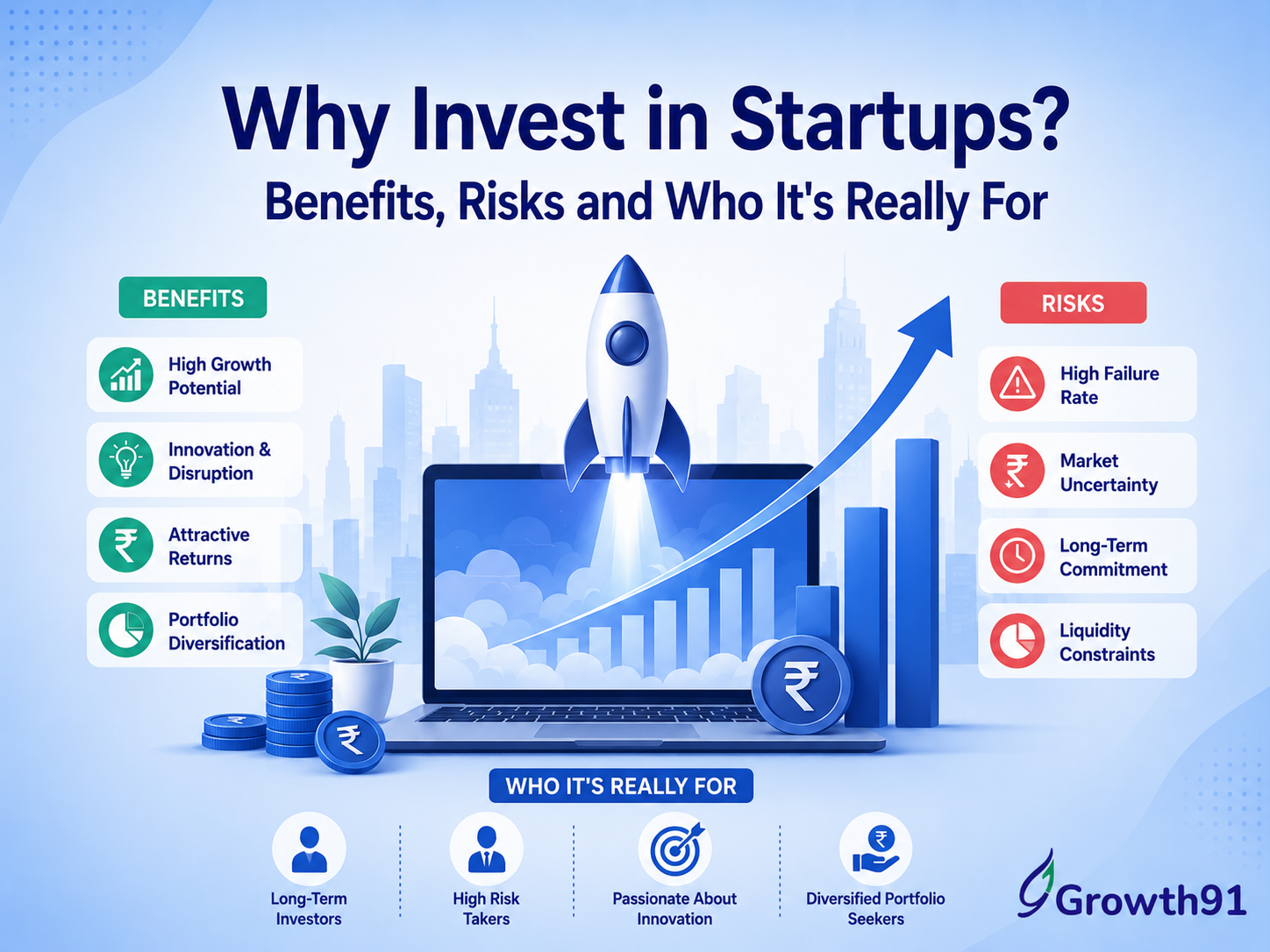
India’s startup scene has changed how people think about wealth building. You no longer need a family broker or a seat on Dalal Street to back early companies. Today, more Indians are asking a simple question: should I invest in startups?
The honest answer is not yes for everyone. Startup investing can deliver outsized returns. It can also tie up your money for years with no guarantee of profit. This guide walks through the benefits of startup investing, the risks that catch people off guard, and the type of investor this path actually suits.
Whether you are curious about your first deal or trying to decide if startup equity belongs in your portfolio, read this before you write a cheque.
What Does It Mean to Invest in Startups?
When you invest in startups, you usually buy a small ownership stake in an early-stage company. In exchange for your capital, you get equity. If the company grows, your stake may grow in value. If it fails, you may lose most or all of what you put in.
There are a few common paths:
- Angel investing. You invest directly in a founder you know or meet through your network.
- Syndicates and platforms. You join other investors through startup investing platforms that pool capital and handle paperwork.
- Venture capital funds. You invest in a fund that spreads money across many startups on your behalf.
Each path has different ticket sizes, timelines, and levels of involvement. A first-time investor might start with ₹2 lakh to ₹10 lakh on a platform. A seasoned angel might write much larger cheques after years of pattern recognition.
The key idea is simple. You are betting on growth before the market fully prices it in. That is both the opportunity and the risk.
Benefits of Startup Investing
The benefits of startup investing go beyond chasing the next unicorn headline. Here is what draws serious investors to this asset class.
High growth potential
Public stocks move in single-digit or low double-digit percentages in a good year. A successful startup can multiply an early investor’s stake several times over. One strong exit can cover losses from multiple failed bets. That is why experienced angels build portfolios, not one-off punts.
Portfolio diversification
Most Indian portfolios lean heavily on fixed deposits, mutual funds, and real estate. Startup equity behaves differently. It is illiquid and risky, but it does not always move with the Nifty. A small allocation can add growth exposure that traditional assets rarely offer.
Early access to innovation
When you back a company at seed or pre-Series A stage, you see new products and business models before they hit the mainstream. Fintech, healthtech, agritech, and AI startups in India are solving problems at scale. Investors get a front-row seat to that change.
Supporting founders and the economy
Capital is oxygen for early founders. Your investment helps hire talent, build product, and reach customers. Many investors also enjoy mentoring founders and opening doors through their network. The financial return matters, but the impact on India’s builder ecosystem is real.
If you want to understand how returns actually materialize, read our guide on understanding exit strategies in startup investments. Exits through acquisition or IPO are how most investors eventually see cash back.
Risks Every Investor Should Understand
Startup investing is not a shortcut to easy money. Treat these risks as core facts, not fine print.
- High failure rate. Most early-stage companies do not reach a successful exit. You should expect many investments to return zero.
- Illiquidity. Unlike listed shares, you cannot sell startup equity on a Tuesday afternoon. Your money may stay locked for five to ten years.
- Valuation uncertainty. Pre-revenue startups are hard to price. You might overpay for hype or miss a great deal because the numbers look unclear.
- Dilution. Later funding rounds can reduce your ownership percentage unless you follow on with more capital.
- Long timelines. Even winning companies take years to mature. Patience is not optional.
Our post on breaking down the risks of investing in Indian startups goes deeper into how to spot red flags before you commit.
First-time investors often underestimate operational and legal costs too. Read about hidden costs and common angel investing mistakes so you budget beyond the headline cheque size.
Who Should (and Shouldn’t) Invest in Startups?
Startup investing rewards a specific mindset and financial position. It punishes people who treat it like a lottery ticket.
This path may suit you if:
- You have surplus capital you can afford to lock away for years.
- You accept that total loss on individual deals is normal.
- You are willing to do homework on founders, markets, and terms.
- You think in portfolio terms, not single-bet terms.
- You have stable income or wealth outside this asset class.
This path may NOT suit you if:
- You need the money within three to five years.
- One bad investment would seriously hurt your finances.
- You want predictable monthly returns.
- You dislike reading term sheets and cap tables.
- You chase hype without understanding the business.
If you are new to the space, start with our guide for first-time investors in Indian startups. It covers mindset, ticket size, and the habits that separate thoughtful angels from impulse backers.
How to Invest in Startups in India
Ready to move from reading to action? Here is a practical path for those who want to invest in startups india the right way.
Step 1: Set your allocation
Most advisors suggest keeping startup equity to a small slice of your overall net worth. Common ranges fall between 5% and 15% for active angel investors. Never invest money you need for emergencies, EMIs, or near-term goals.
Step 2: Choose your access route
You can invest through personal networks, angel groups, or online platforms. Platforms lower the barrier for new investors by curating deals, standardizing documents, and pooling smaller tickets. Explore trusted startup investing platforms like Growth91 to see vetted opportunities and learn how the process works.
Step 3: Run basic due diligence
Before you invest, review the founding team, market size, product traction, and cap table. Ask hard questions. Talk to customers if you can. Read our step-by-step guide on how to invest in Indian startups for a full checklist.
Step 4: Understand the terms
Know your entry valuation, share class, and rights. Are you getting common equity or preferred shares? Is there a pro-rata right to invest in future rounds? Clarity here saves regret later.
Step 5: Start small and learn
Your first deal teaches more than ten blog posts. Begin with an amount that lets you learn without stress. Track what worked and what did not. Improve your process deal by deal.
Balancing Risk and Reward in Your Portfolio
Smart startup investors think like gardeners, not gamblers. They plant many seeds knowing most will not become trees.
- Spread across sectors. Do not put every rupee into one hot theme like AI or D2C.
- Spread across stages. Mix seed bets with slightly later-stage companies that have revenue.
- Reserve follow-on capital. Save some dry powder for your winners when they raise again.
- Track honestly. Write down why you invested and review outcomes yearly.
Our guide on balancing risk and reward in Indian startup investing offers frameworks for sizing bets and staying calm when one company struggles.
Use a simple startup investing checklist before every deal. Consistency beats gut feeling over the long run.
How Startup Investing Fits the Broader Ecosystem
When you invest in startups, you sit on one side of a two-sided market. Founders on the other side are trying to raise funding for product, hiring, and growth.
Understanding how startup funding works helps you evaluate deals with context. You will read pitch decks differently once you know what founders face at each stage.
If you are a founder reading this by accident, Growth91 also runs a startup funding platform built to connect Indian companies with the right investors. The same ecosystem that creates risk for investors creates opportunity for builders.
Conclusion
So, why invest in startups? Because early-stage equity offers growth, diversification, and a front-row view of India’s most ambitious companies. But it demands patience, research, and money you can afford to lose.
This is not a game for everyone. It rewards prepared investors who spread risk, study founders, and stay calm through long timelines. If that sounds like you, start learning before you start writing cheques.
Explore curated opportunities and educational resources on Growth91 to invest in Indian startups with clearer eyes and a smarter process.
FAQ
How much money do I need to start investing in startups in India?
Many platforms allow entry from ₹2 lakh to ₹5 lakh per deal. Some syndicates accept lower amounts. Direct angel deals can start higher depending on the company and network.
What returns can I expect from startup investing?
There is no fixed return. Some deals go to zero. A small number may return 10x or more. Portfolio approach matters more than any single outcome. Think in years, not months.
Is startup investing legal in India?
Yes, with proper structures and compliance. Platforms and syndicates typically handle investor eligibility and documentation. Read up on regulations or consult a professional if you are unsure about your status.
How is startup investing different from buying listed stocks?
Listed stocks are liquid, priced daily, and backed by public disclosures. Startup equity is private, illiquid, and harder to value. The risk profile and time horizon are fundamentally different.
Should I invest in one startup or many?
Many. Diversification is the most practical way to manage failure risk. Most experienced angels aim for a portfolio of multiple bets across sectors and stages rather than one concentrated wager.
Leave a Reply